Microsoft Teams
In-App UX & Feature Design

Designed multiple in-app features focused on chat and channel experiences, improving personalization and usability for hybrid work environments across diverse user contexts.
🔒NDA Notice

This project is covered by an NDA. Visuals have been intentionally genericised to protect confidentiality. The focus of this case study is the design thinking, decisions, and process behind the work — not the final deliverables.

Overview

At Microsoft, I helped create chat and channel experiences for Microsoft Teams by personalising the platform for millions of people around the world ranging from novice to sophisticated users for better communication in it's current and future status in the hybrid world. I developed multiple in-app functionality features for a range of clients that including Westpac, Nestle, Macquarie Bank and many more.

Introduction

As Microsoft Teams evolved, it significantly strengthened employee collaboration by creating a continuous feedback loop—introducing new features, gathering user insights, and refining the product to drive ongoing innovation.

When the COVID-19 pandemic shifted work and learning online, the platform became essential, enabling teams, students, and organizations to meet, chat, collaborate, and automate workflows within a single secure environment. Now a core part of daily professional and personal communication, the product continues to advance, using lessons from past usage to further enhance its user experience and capabilities.

The Challenge

Microsoft Teams was evolving rapidly — but for enterprise clients like Nestlé, Westpac, and SBI, a one-size-fits-all platform wasn't enough. Each organisation had different communication structures, security requirements, and ways of working. My challenge was to design in-app experiences that felt native to Teams while serving the specific operational needs of each client — across millions of users in hybrid work environments.

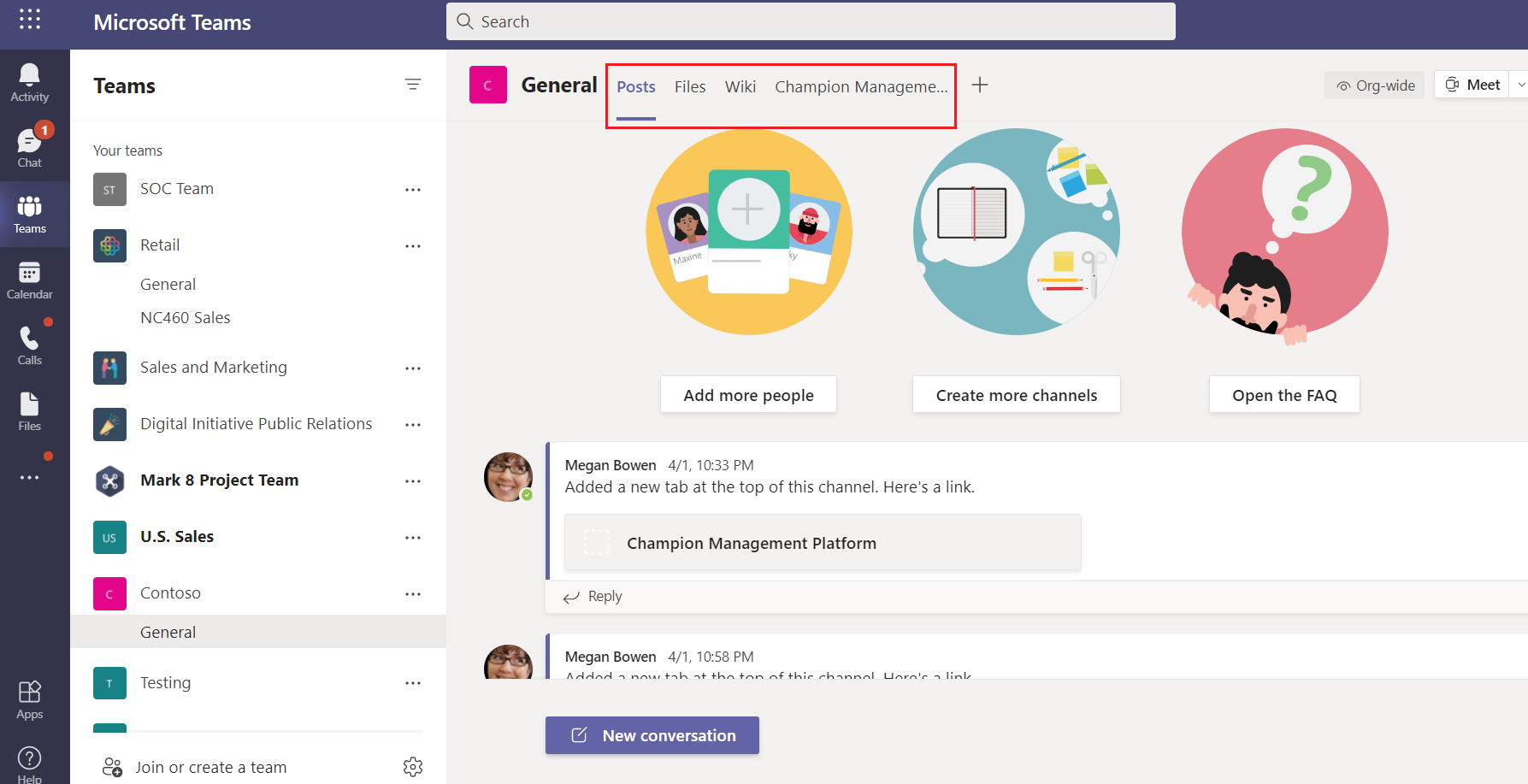
Focus

The project centered on improving collaboration, engagement, and productivity within Microsoft Teams by designing more natural, inclusive, and seamless meeting experiences across remote, hybrid, and in-person settings, while strengthening real-time and asynchronous communication, interactivity, and integrated workflows within a unified platform.

01.

Creating more natural and engaging meeting experiences

Enables employees to connect seamlessly with those inside and outside of their networks, and providing ways to make remote presentations richer and more impactful.
02.

Shifting successfully from on-site to remote to hybrid environment

Real-time connection and collaboration within Microsoft Teams were key components of transitioning from on-site to remote work, with users sending on average 45% more chats per week.
03.

Making Microsoft Teams a hub for inclusivity

Incorporating features that drive interaction and participation, like meeting chat and the “raise hand” feature, as well as reactions, emojis, and integrated GIF support. This ensured our employees will have a more personal and interactive meeting experience, whether they’re joining remotely or attending from a conference room.
04.

Fostering real-time and asynchronous collaboration

Monthly active use of Microsoft Teams channels had gone up nearly 200%. It helped employees and their teams better communicate, collaborate, and manage access to files. It allows users in fostering the need for an asynchronous way to collaborate.
05.

In-App Integration

With apps like Yammer and Microsoft Power Platform now integrated into Microsoft Teams, this had further helped users actively engage with their colleagues in several new and exciting ways.
06.

Boosting Productivity

In companies like Accenture, Toyota, Kohler, Lumen, Ernst & Young, and Pfizer are just a few of the companies that use Microsoft Teams to keep their global enterprises running successfully. Microsoft Teams’ shift from a tool that was originally focused solely on collaboration, to an application that helps deliver on business process and automation.

Features I worked on

Tabs

Tabs are Teams-aware webpages embedded in Microsoft Teams. You can add them as part of a channel inside a team, group chat, or personal app for an individual user. Personal tab, channel or group tab, stage view, and link unfurling.

Bots

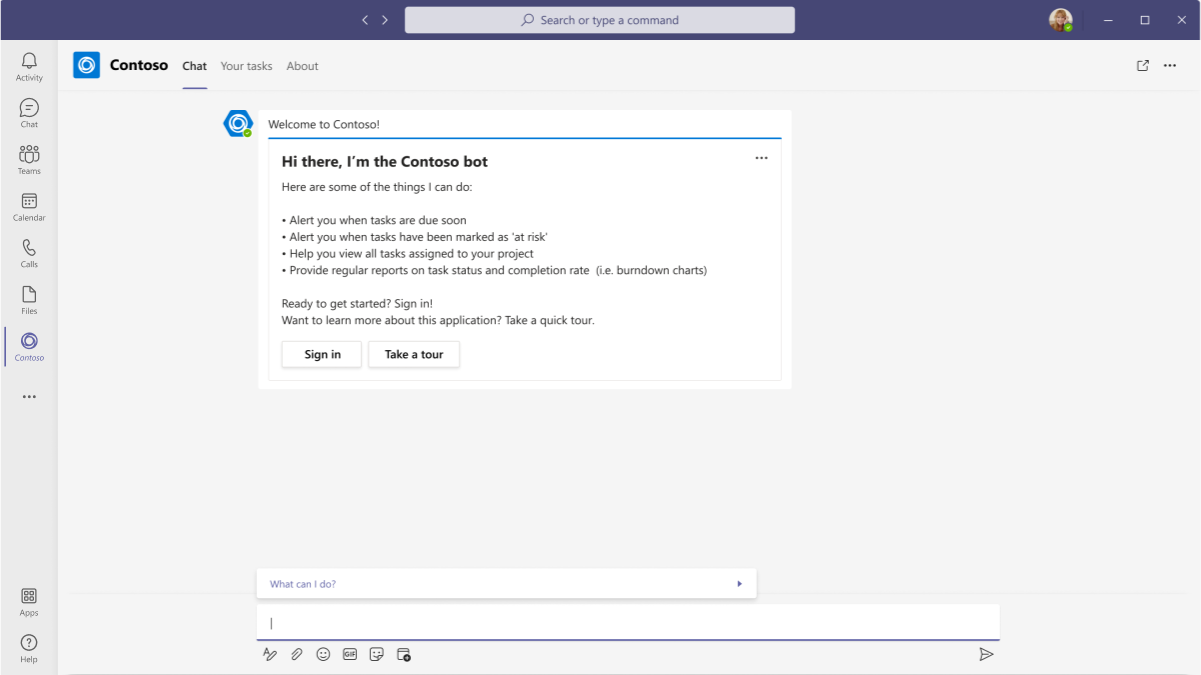
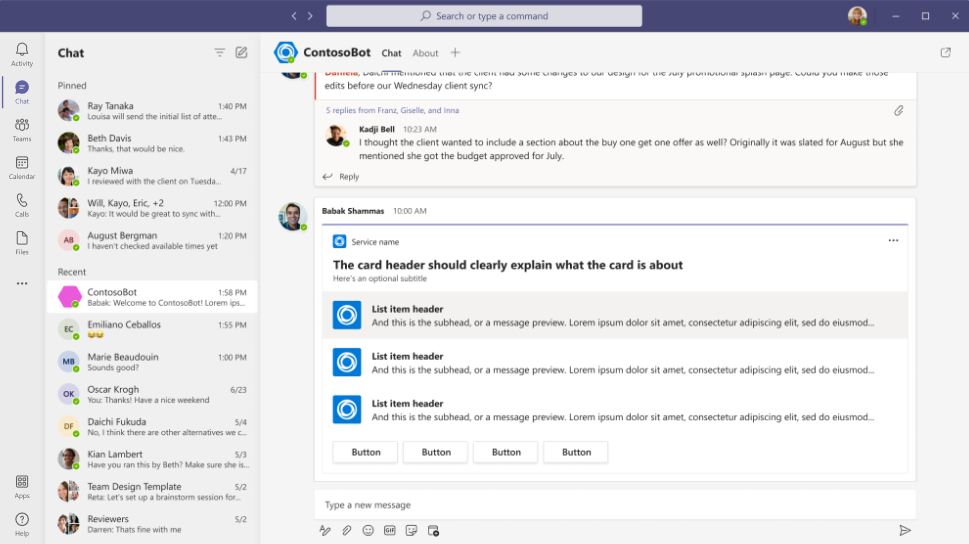
A chatbot or conversational bot is an app that runs simple and repetitive automated tasks done by the users. A bot interaction can be a quick question and answer, or it can be a complex conversation that provides access to services.

Message Extensions

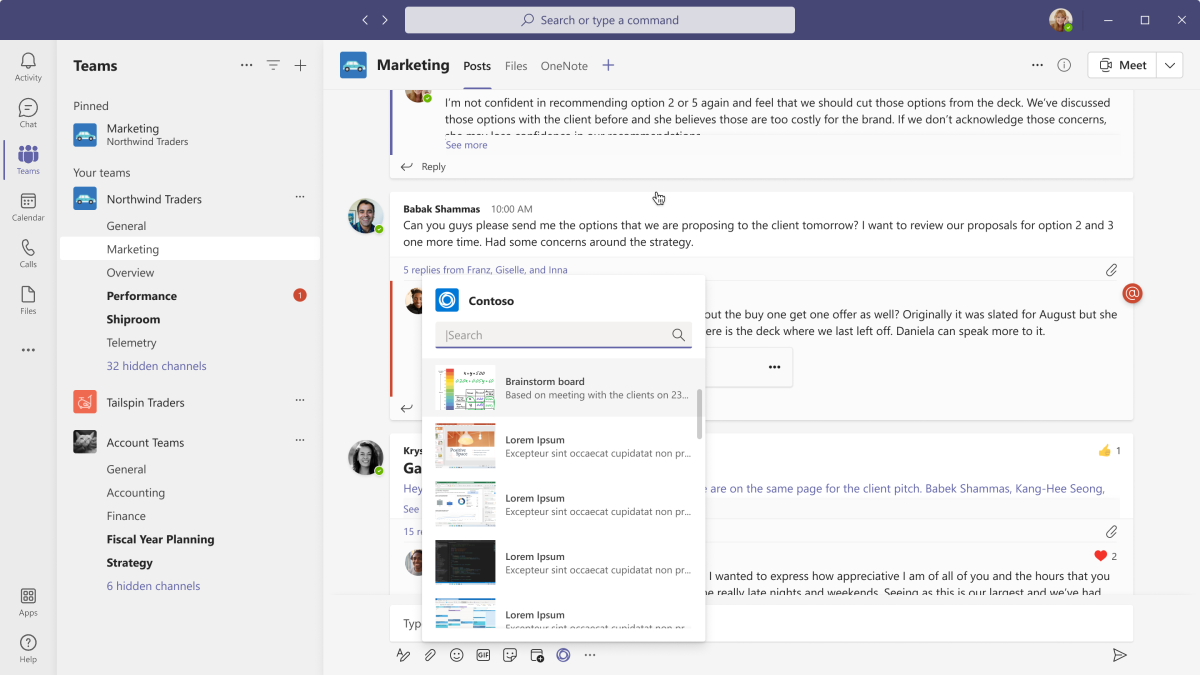
Message extensions are shortcuts for inserting app content or acting on a message without navigating away from the conversation.eg: Create a bug in your tracking system based on a Teams message, assign that bug to a user, and send a card to the conversation thread with the bug's details.

Adaptive Cards

Cards help you organise information into groups and give users the opportunity to interact with specific parts of the information. Sharing using text and images; gathering information using input forms.

Meeting Extention

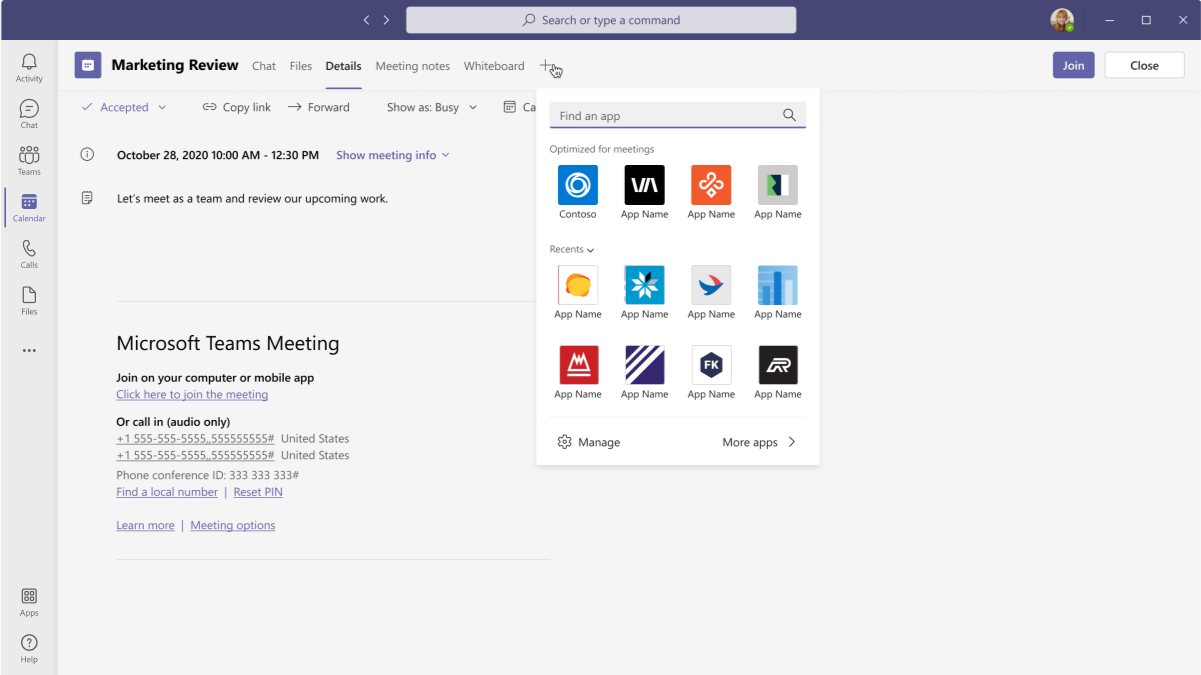
You can create apps to make meetings more productive. Ask people to complete a survey during a call or send a quick reminder that doesn’t interrupt the flow of the meeting.

"A true team player with a calm, can-do attitude. She consistently delivered high-quality, well-thought-out designs that balanced business goals with user needs. Always reliable under pressure and a pleasure to work with — especially on fast-paced, high-stress projects."

Erin

Product Owner at Microsoft

My Reflection

The biggest lesson from Microsoft wasn't about design craft — it was about designing within constraints you don't control. Working inside the Microsoft 365 ecosystem meant every decision had to account for the design system, the engineering pipeline, the client's IT policies, and Microsoft's own product roadmap simultaneously. That experience taught me to find creative space within tight constraints rather than fighting them — a skill I've used on every complex enterprise project since.